About the Project
Solar panels
30 ha
Number of panels
22230
Power per panel
690 W
Annual energy production
18 GWh
Storage capacity
50 MWh


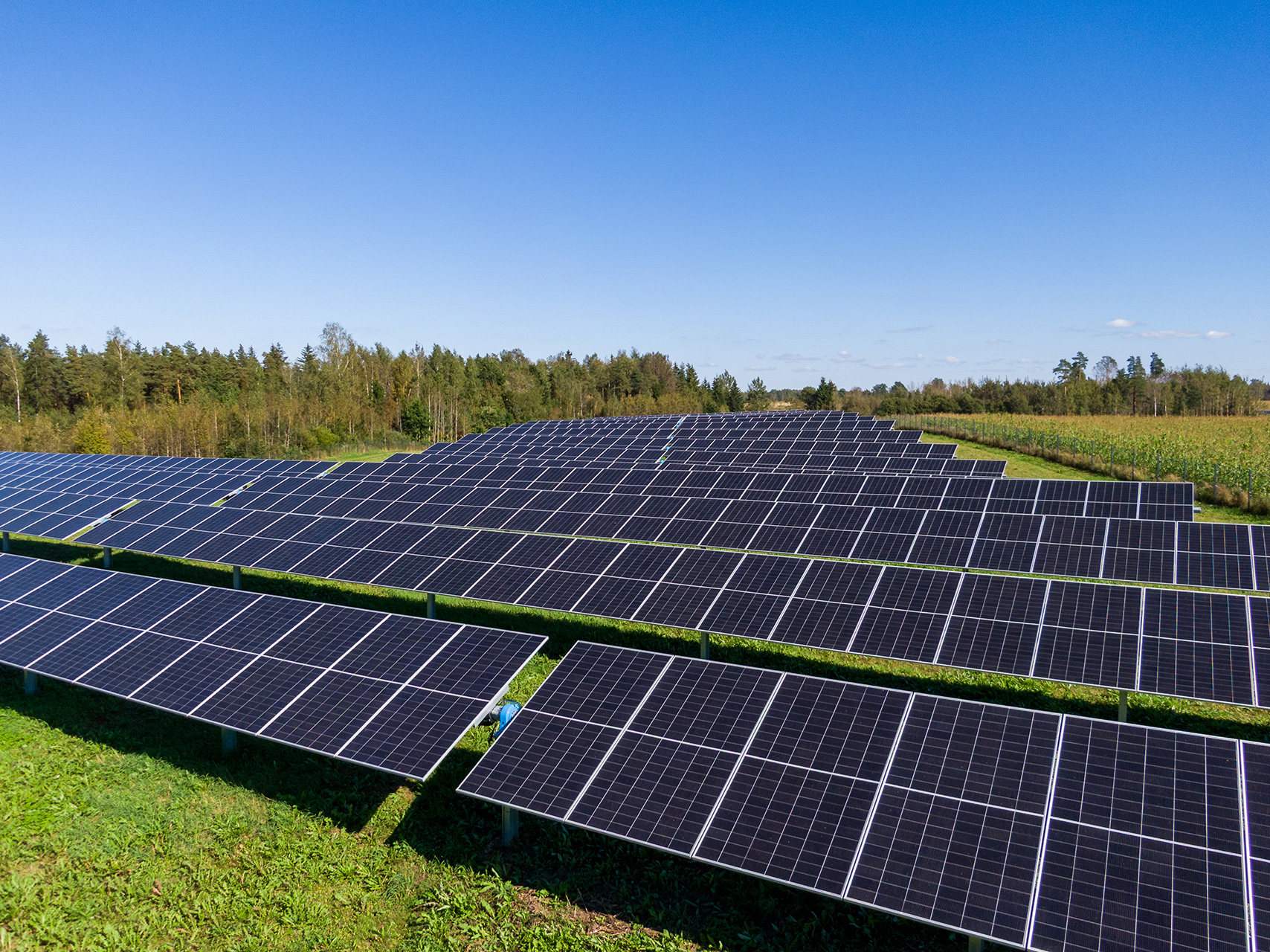
Located in Kanepi, Southern Estonia, this innovative solar power generation and energy storage facility is the largest of its kind in Estonia. It is a grid-connected hybrid energy solution that combines a utility-scale solar power plant with a battery energy storage system.
30 ha
22230
690 W
18 GWh
50 MWh
2021
Project concept, planning, land acquisition, and solar power plant development
July 2022
Grid connection agreement signed with Elering
January 2023
Power transformers ordered (delivery scheduled for late 2024)
December 2023
Solar panels ordered
February 2024
Construction contract signed with Energiapartner
August 2024
Construction of the 110 kV transmission grid connection
August 2024
Completion of Kanepi Energia's own substation
June–December 2024
Construction of the solar power plant
March 2025
Solar power plant completion and synchronized with the national grid
May 2025
Battery energy storage system synchronized with the grid
Q2 2025
Completion of Phase I of the battery energy storage system
Q2 2026
Completion of Phase II of the battery energy storage system

The project consists of a 12 MW grid connection, a 15 MW solar power plant, and a 25 MW / 50 MWh battery energy storage system (BESS). This integrated solution enables more efficient use of solar energy while supporting grid balancing and system stability.

Tracker-mounted solar panels follow the sun throughout the day, increasing electricity generation, particularly during the morning and evening hours. This improves overall plant efficiency and enhances the flexibility of renewable energy production.

The plant uses bifacial solar panels that capture not only direct sunlight but also reflected light from the ground and snow. This significantly improves energy yield, especially during colder and snowier seasons.

The solar power plant generates renewable electricity, while the battery energy storage system stores surplus energy and releases it when demand is higher. This integrated approach reduces exposure to electricity price volatility and strengthens security of supply.
Battery Technology
The energy storage system uses LFP (Lithium Iron Phosphate) battery technology, providing high safety standards, long service life, and reliable performance even under frequent charging and discharging cycles.
Capacity and Power
The facility has a total output capacity of 25 MW and an energy storage capacity of 50 MWh, enabling efficient storage and dispatch of electricity in response to fluctuations in renewable generation and electricity demand.
Supporting the Electricity Grid
The battery storage system helps balance the electricity grid by storing excess renewable energy and supplying it during periods of increased demand. This improves grid reliability, flexibility, and overall system resilience.
Kanepi Energia’s solar power plant generates approximately 18 GWh of renewable electricity annually. Combined with the 25 MW / 50 MWh battery energy storage system, the project increases the share of renewable energy, reduces reliance on fossil fuel-based electricity generation, and supports a more stable electricity grid.
Annual Impact
Photographer: Priit Ladva


Photographer: Priit Ladva


Photographer: Katrin Leement


